


For most CEOs today, engaging an external firm for product engineering services is less about cutting costs and more about accelerating innovation while minimizing delivery risk. Whether launching a digital platform, modernizing a core product, or expanding into new technology domains, the right engineering partner can make or break your growth trajectory.
| Evaluation Area | High-Maturity Indicators | Red Flags |
|---|---|---|
| Architecture and Design | Modular, microservice-based, scalable patterns; cloud-native reference architectures | Monolithic approach, limited reusability |
| Quality and Test Automation | Implements shift-left testing, code coverage >80% | Manual-heavy QA processes |
| DevOps and Delivery Automation | CI/CD pipelines, GitOps, container-based deployment workflows | Ad-hoc deployments without audit trails |
| Security and Compliance | Automated vulnerability scanning, compliance-by-design (GDPR, SOC2) | Security managed post-release |
| Performance and Observability | Real-time instrumentation and SLA monitoring | Minimal operational visibility |
But how do you distinguish marketing polish from real engineering depth? How do you identify a partner who won't just deliver code but will co-own the product vision and future scalability?
| Testing that inside table working | tesing | test | ||
| opend the data for testing |
The Changing Stakes in Product Engineering Partnerships
Digital transformation has flattened traditional boundaries between in-house teams and external experts. Today's product engineering consulting partner isn't just a vendor but an extension of your product organization integrated into your architecture, roadmaps, and customer delivery cycles.
Successful partnerships now hinge on three critical dimensions:
Engineering maturity and domain expertise
Ability to scale agile collaboration at enterprise speed
A culture of co-innovation and transparency
The modern definition of digital product engineering services has expanded far beyond software development. It includes digital platform engineering, IoT integrations, AI-driven analytics, cloud-native modernization, DevOps automation, and product sustenance.
💡 Industry Insight: According to McKinsey, companies that partner strategically with engineering firms achieve 30-40% faster time-to-market compared to those relying solely on internal resources.
1. Do They Understand Your Product Vision Beyond Technology?
A strategic product development engineering services partner must first decode why your product exists, not just what needs to be built. CEOs should seek teams that start by understanding market forces, user dynamics, and the business KPIs driving the initiative.
What to assess:
Can they translate your business goals into measurable product outcomes?
Do they bring product management and UX insights to shape early ideation?
Have they delivered digital product engineering services aligned with similar business models or industries?
CEO's checkpoint:
A reliable partner will proactively challenge assumptions. They'll present value hypotheses, question feature prioritization, and propose MVP roadmaps grounded in data—not just accept requirement documents at face value.
Real-World Example: A mid-sized fintech company reduced its product launch timeline by 40% by partnering with an engineering firm that aligned technical architecture with regulatory compliance requirements from day one.
💡 Key Takeaway: The best product engineering solutions begin with business outcomes, not technical specifications.
2. How Mature Is Their Engineering Process?
Engineering excellence depends on repeatable and measurable processes. True product engineering consulting goes beyond coding—it involves quality assurance automation, CI/CD, observability design, and lifecycle governance.
Technical process framework to evaluate:
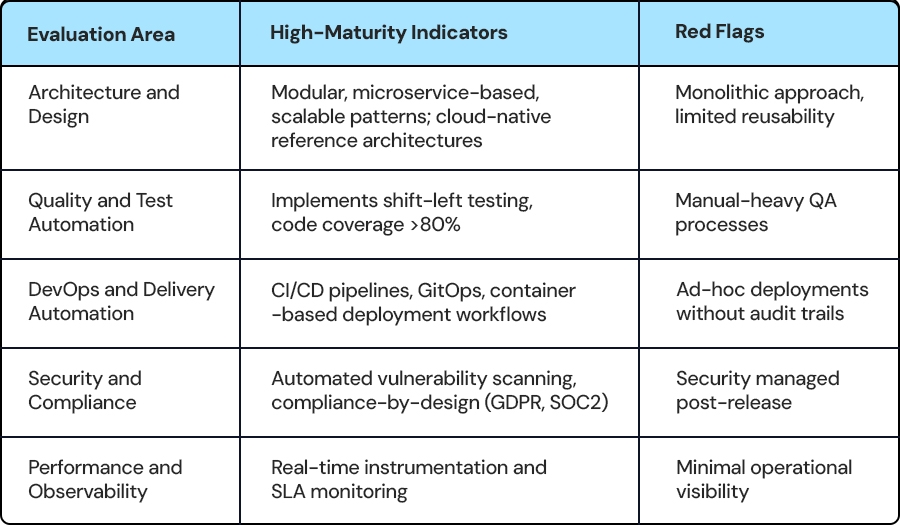
When partners display this maturity model transparently through metrics (velocity, MTTR, defect leakage, cost of quality), it signals engineering discipline worth trusting.
💡 Insight: Mid-size firms achieve faster ROI when partners align engineering KPIs with business outcomes rather than just tracking development velocity.
3. Can They Scale with Your Product Lifecycle?
Product evolution often moves from initial MVP development to scaling, modernization, and long-term sustenance. A strong product engineering services partner should support this continuum—adapting skill sets and resourcing models over time.
Typical Product Engineering Lifecycle:
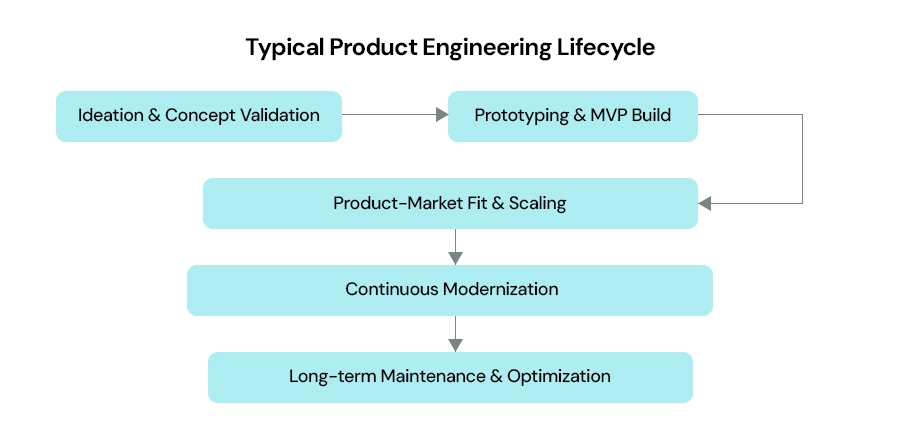
Questions to probe:
How flexible is their engagement model across build, scale, and sustain phases?
Do they offer domain-specific accelerators or reusable frameworks to speed delivery?
Have they handled transitions from legacy products to new platforms or architectures?
If your roadmap anticipates cloud migration, AI/ML adoption, or IoT extensions, the partner must demonstrate aptitude across this full spectrum of product development engineering services.
Case Snapshot: A healthcare SaaS provider successfully migrated from monolithic to microservices architecture while maintaining zero downtime by partnering with an engineering firm that provided phased modernization support.
4. What Is Their Talent Depth and Technology Breadth?
The top reason engineering partnerships fail is shortage of specialized talent midway through the project. CEOs must validate that the partner can continuously supply and upskill engineers across core and emerging technology stacks.
Evaluate capabilities in:
Cloud-native and multi-cloud environments (AWS, Azure, GCP)
Microservices, API-led integration, and event-driven architectures
Modern front-end frameworks (React, Angular, Vue)
Backend and data stack (Python, Node.js, Java Spring Boot, Kafka, Snowflake)
AI, ML, and data engineering pipelines
DevSecOps, observability tools, and automated governance
Ask these critical questions:
What is the partner's approach to continuous learning and technology adoption?
How do they retain key engineering talent during long-term programs?
Can they assemble cross-functional squads blending design, data, and architecture expertise?
The right partner will showcase career development programs, internal innovation labs, and certifications as proof points—not vague claims of having "expert engineers."
💡 Industry Data: Gartner reports that 68% of digital transformation initiatives fail due to lack of specialized technical expertise.
Learn more about our technical capabilities and talent development programs
5. How Transparent and Measurable Is Their Delivery Governance?
Technical delivery without visibility is a risk multiplier. CEOs should insist on structured delivery governance mechanisms that bring transparency and accountability.
A robust governance framework typically includes:
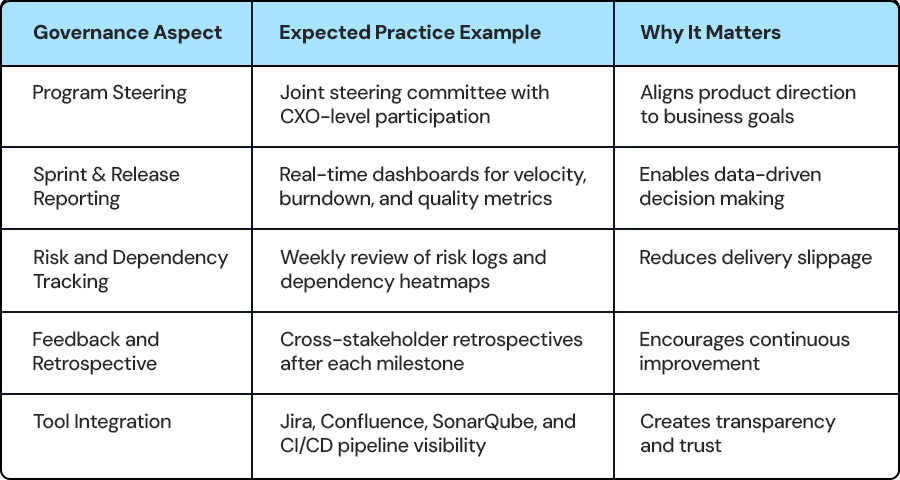
A mature partner balances agile autonomy with executive visibility—providing CEOs with actionable status insights, not just progress reports.
💡 Key Takeaway: Transparency in product engineering services builds trust and enables faster course correction when needed.
6. How Strong Is the Strategic Fit and Cultural Compatibility?
Technology alignment alone won't sustain long-term success. The cultural dimension—how teams communicate, share accountability, and navigate uncertainty—defines whether the collaboration feels like a partnership or a transaction.
Evaluate cultural dimensions:
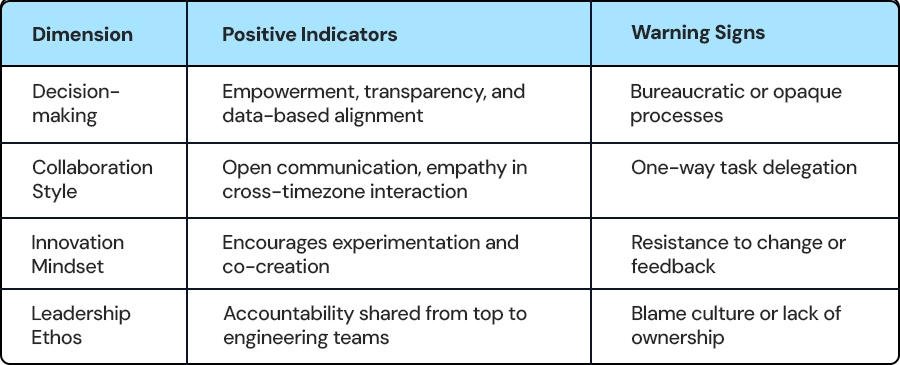
CEO Action Item:
Ask for live interactions with the delivery leadership team and engineers, not just sales executives. Observe how they discuss problems—it reveals more about trust than any proposal document can.
7. Are Their Commercials and Engagement Models Future-Proof?
A pricing model must align with business outcomes, not just development effort. CEOs should explore flexible arrangements that incentivize shared success across the product journey.
Common engagement models in product engineering consulting:
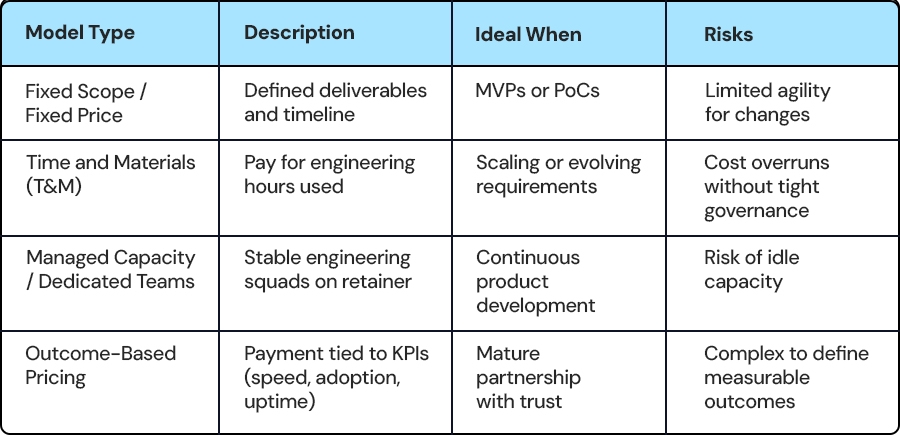
For dynamic digital environments, blended models—such as base retainer plus performance variables—often balance cost flexibility with accountability.
💡 ROI Insight: Companies using outcome-based pricing models report 25% higher satisfaction with their product engineering solutions partners.
8. How Do They Approach Long-Term Co-Innovation?
The final differentiator between a vendor and a strategic partner is their ability to innovate with you, not just for you. In a competitive marketplace, the product engineering partner's innovation muscle becomes your competitive edge.
Signs of a co-innovation mindset:
Access to R&D labs for emerging tech (AI, IoT, 5G, edge computing)
Joint IP development or patent collaboration frameworks
Hackathons or design sprints co-hosted with your internal teams
Dedicated innovation budgets or sandbox environments
Reusable solution accelerators for faster prototyping
Leading firms offering digital product engineering services now embed predictive insights into product roadmaps—using AI to forecast feature adoption, detect anomalies, or even automate regression testing.
Innovation Example: A retail platform achieved 50% faster feature rollout by co-creating an AI-driven testing automation framework with their engineering partner.
💡 Key Takeaway: If a partner can articulate future possibilities clearly while still managing current delivery commitments, that's a strong indicator of innovation maturity.
Decision Framework for CEOs
A structured evaluation model helps convert qualitative discussions into strategic clarity. Below is a simplified framework.
Partner Selection Scoring Matrix
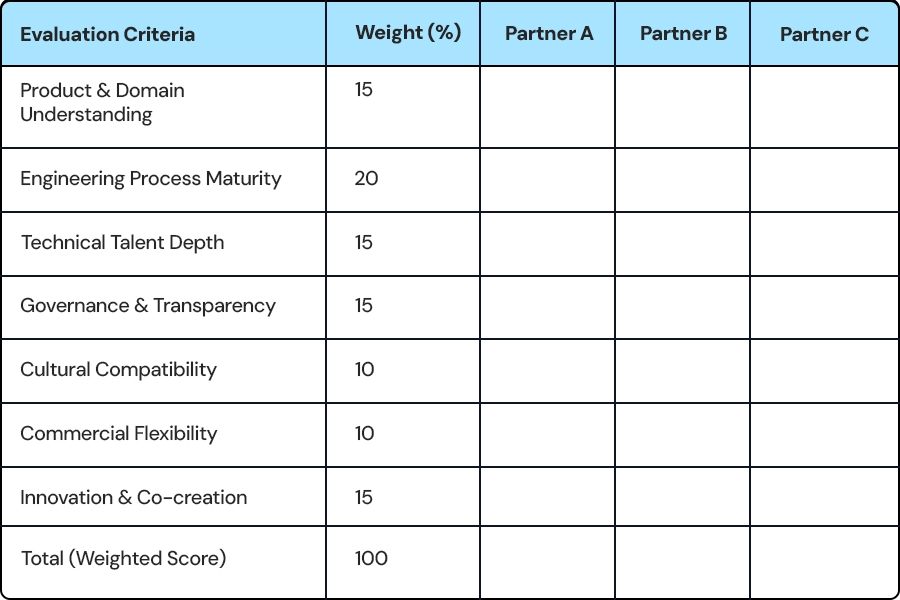
CEOs can use such a quantitative model to drive selection objectivity. This shifts the discussion from "which vendor sounds good" to "which partner drives measurable product and business outcomes.
Avoiding Common Pitfalls in Partner Selection
Even experienced organizations fall into predictable traps when selecting vendors for complex engineering programs. CEOs can mitigate risks by watching out for these red flags:
Overemphasis on cost: Choosing low bids often sacrifices engineering depth and continuity
No proof of scalability: Many firms can deliver a pilot fast but struggle when scale and governance come into play
Opaque team structure: Insist on meeting the actual engineering leads and architects, not just account representatives
Lack of product mindset: Vendors focused solely on output may miss user experience and market adaptation needs
Weak post-launch support: Many teams excel in building, not sustaining or modernizing products
Selecting the right product engineering services partner therefore demands rigorous questioning coupled with long-term strategic lens.
The CEO's Due Diligence Flow
Below is a simplified due diligence process CEOs can follow before finalizing their engineering partner.
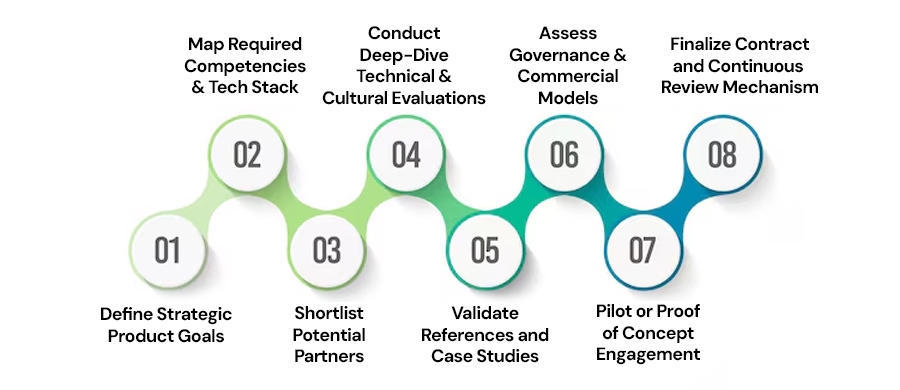
This pipeline ensures that the partner evaluation remains structured, transparent, and data-backed—minimizing surprises during execution.
Building a Long-Term Partnership Mindset
Once selected, the partnership's success depends on how both sides invest in its maturity. CEOs should institutionalize:
Quarterly strategic reviews of outcomes
Cross-functional governance forums involving product managers, architects, and finance leaders
Shared KPIs linking innovation, product uptime, and user satisfaction
Recognition programs that celebrate joint wins
Such initiatives strengthen accountability and foster a culture of shared success—transforming product development engineering services from a vendor transaction into a strategic co-creation alliance.
Key Takeaways for CEOs
✅ Strategic Alignment: Choose partners who understand your business model, not just your tech stack
✅ Engineering Maturity: Validate process discipline through measurable metrics and automation practices
✅ Scalability: Ensure the partner can support your entire product lifecycle from MVP to modernization
✅ Talent & Technology: Verify depth in both current and emerging technology domains
✅ Governance: Demand transparency through real-time dashboards and joint steering mechanisms
✅ Cultural Fit: Assess collaboration style and innovation mindset through direct team interactions
✅ Commercial Flexibility: Explore outcome-based models that align incentives with business results
✅ Co-Innovation: Look for partners who bring R&D capabilities and future-focused thinking
Final Thoughts
The right product engineering consulting partner is more than a delivery enabler—they are the force multiplier of your innovation agenda. Selecting them requires CEOs to move beyond tactical criteria into strategic partnership thinking.
By asking these eight critical questions—from vision understanding to co-innovation potential—you can ensure every engineering dollar accelerates long-term value creation. In a world where technology cycles evolve faster than business models, your engineering partner should not just keep pace but propel you ahead.
Ready to evaluate your next Product Engineering Partner?
👉 Talk to our Product Engineering Experts to discover how we combine strategic thinking, engineering excellence, and innovation to accelerate your digital transformation journey.
Strengthen Your Product Engineering Decisions